
Hawai’i, in two islands
From O'ahu to Hawai'i
Ten days, three travellers, and an itinerary that split cleanly down the middle: O’ahu and Waikīkī first, then the Big Island of Hawai’i. Hawai'i sits far enough behind Sydney that you land on the same day you left. Ours was an evening flight with sleep somewhere over the Pacific, then nine hours later, morning in Honolulu.
Waikīkī, on arrival
Arrivals are quick here: an hour from wheels down to bags dropped at the Alohilani, home for the week. The hotel sits directly across the street from Waikiki Beach and is named for Queen Liliʻuokalani, the last monarch of the Hawaiian Kingdom.
The first day was all about the beach. Ahead of arrival we booked some beach cabanas, which are managed by the hotel. You rent them by the day: a private deck on the sand, fresh towels arriving. We took one between lunch and the shops. Jet lag doesn't survive an afternoon of sun, salt and being horizontal on the sand.
Lunch was MonkeyPod Kitchen, a casual lunch spot which has amazing views out to the water and back onto Waikiki beach. It was the perfect spot to soak in the sunshine and build anticipation for the trip. Then we strolled back to the beach cabanas via Kalakaua Avenue with a few gallery and retail therapy stops along the way.
Dinner was the tiki bar at Twin Fin, which sits on the rooftop of Twin Fin hotel. Another casual spot, live music and very big portions. It was an early-ish night as tomorrow we had a big day in store.
Pearl Harbor and Wai Kai
Pearl Harbor is on most Oahu itineraries. The USS Missouri sits on Ford Island, which is still an active naval base. Uber gets you as far as the Pearl Harbor visitor centre, and a shuttle, running every fifteen minutes, does the rest. The bag rules are strict enough to plan around: a clear bag or a small wallet, lockers on site for anything larger. They can also take suitcases, if you happened to be doing this on the way from the airport.
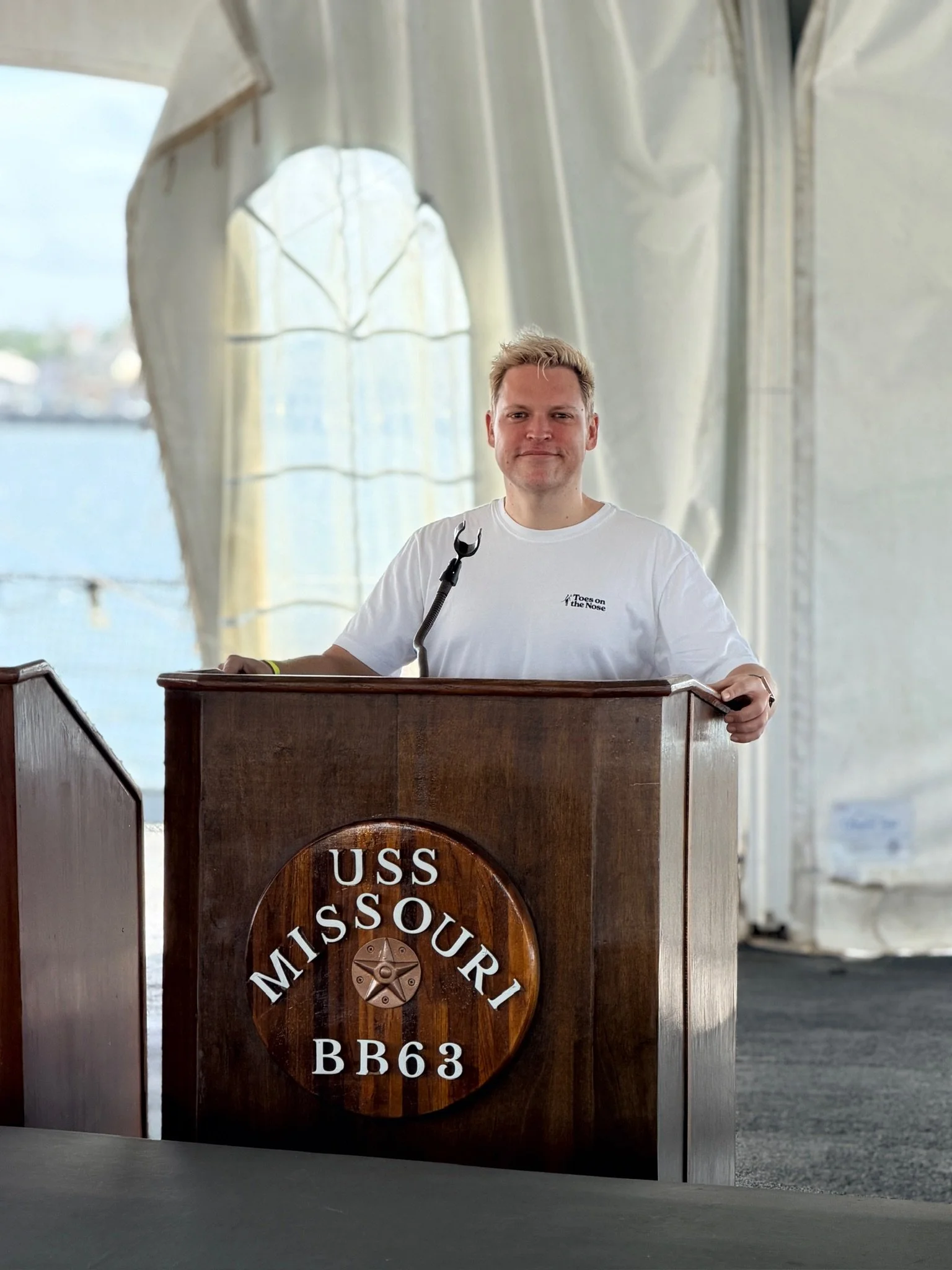
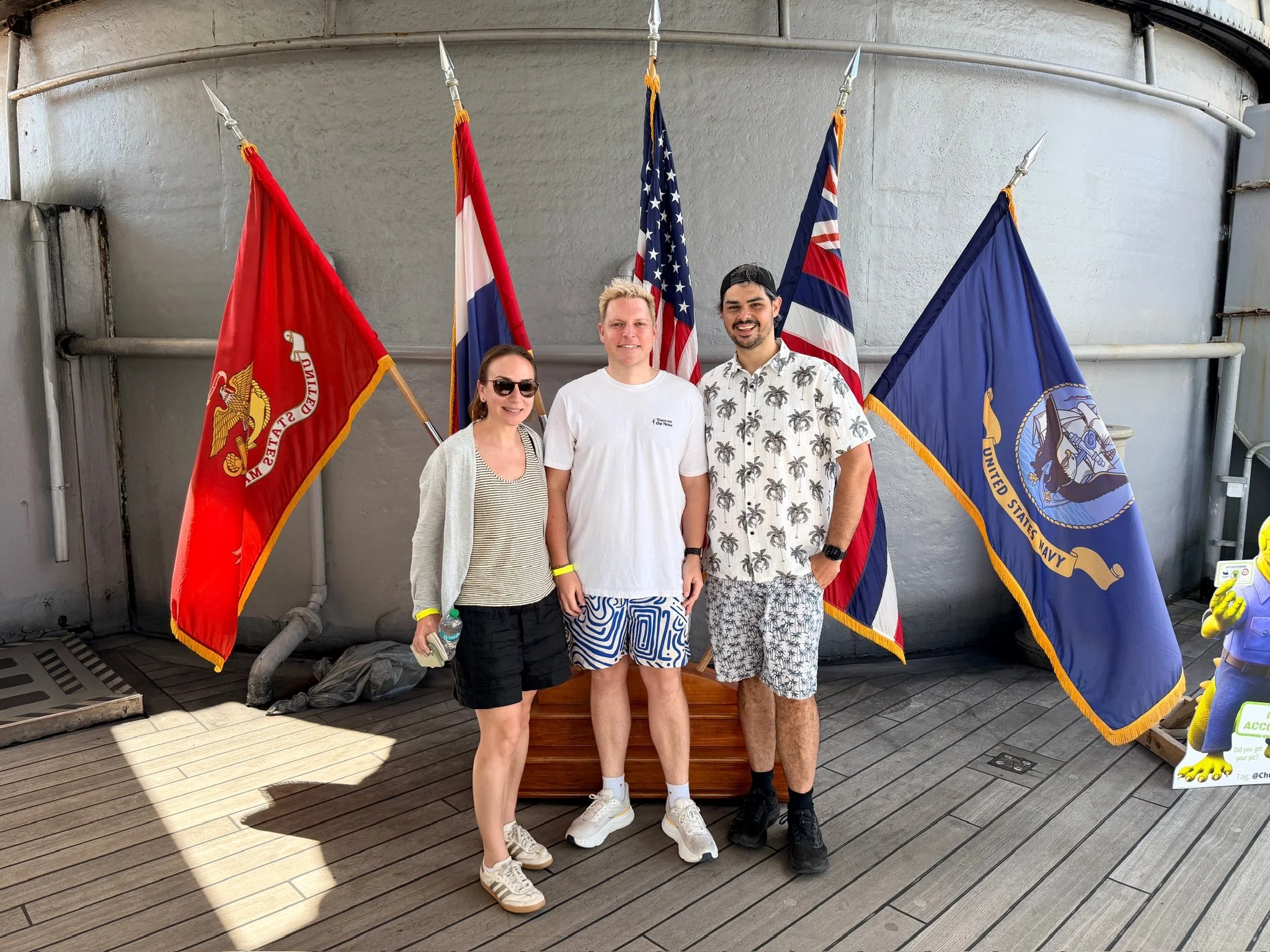
Our tickets included the Captain's Tour, and it turns a walk-through into something else entirely. Ten people, forty-five minutes, and a guide with the keys — the parts of the ship the general ticket never sees.
It follows the chain of command through the ship. You start in the wardroom, where the officers ate, then drop into Radio Central, the room where the captain spoke to his force commanders, its equipment spanning the war years through to Desert Storm. From there you step off the public route into the captain's in-port cabin: a sitting room, a bedroom, a private bath. The only real privacy on an 887-foot ship, and the room where Truman was hosted, and Bob Hope, and Marilyn Monroe. Then a ladder up to the Combat Engagement Center, where Tomahawks were launched in the Gulf, and finally the conning station, twenty commanding officers' worth of view over the bow.
What makes it, though, is the guide. Ours told it in stories rather than dates. Who slept where, what the men ate, which fitting was original and which had been rebuilt. He was in no hurry, and in fact we may have gone over time.
Then you come back out onto the main deck, looking out across the water and the Arizona Memorial is right in front of you. You spend the rest of the visit on the deck, before catching the shuttle back to the visitor centre. From Pearl Harbor we took an Uber twenty minutes west to Wai Kai at Ewa Beach.
Wai Kai is a 52-acre lagoon set just back from the ocean, flat and sheltered, and around it a small waterfront village of decks and bars. The centrepiece is the Wai Kai Wave: a standing wave pool that the operators dial up or down through the afternoon depending on your ability to surf. You can ride it or, just as happily, sit at the WaveBar with a drink and watch other people be dropped by it, which is its own kind of entertainment.
Out on the lagoon there's an inflatable obstacle course (incredible) an acre of peaks, monkey bars, balance beams and a twenty-foot slide. We surprised ourselves with how much fun, and time, was spent on the obstacle course. The lagoon also has additional activities, such as paddle boards, kayaks and hydro bikes. A range of land based and floating cabanas can be hired if you'd rather stay horizontal, and lunch is easily managed via the onsite catering app.
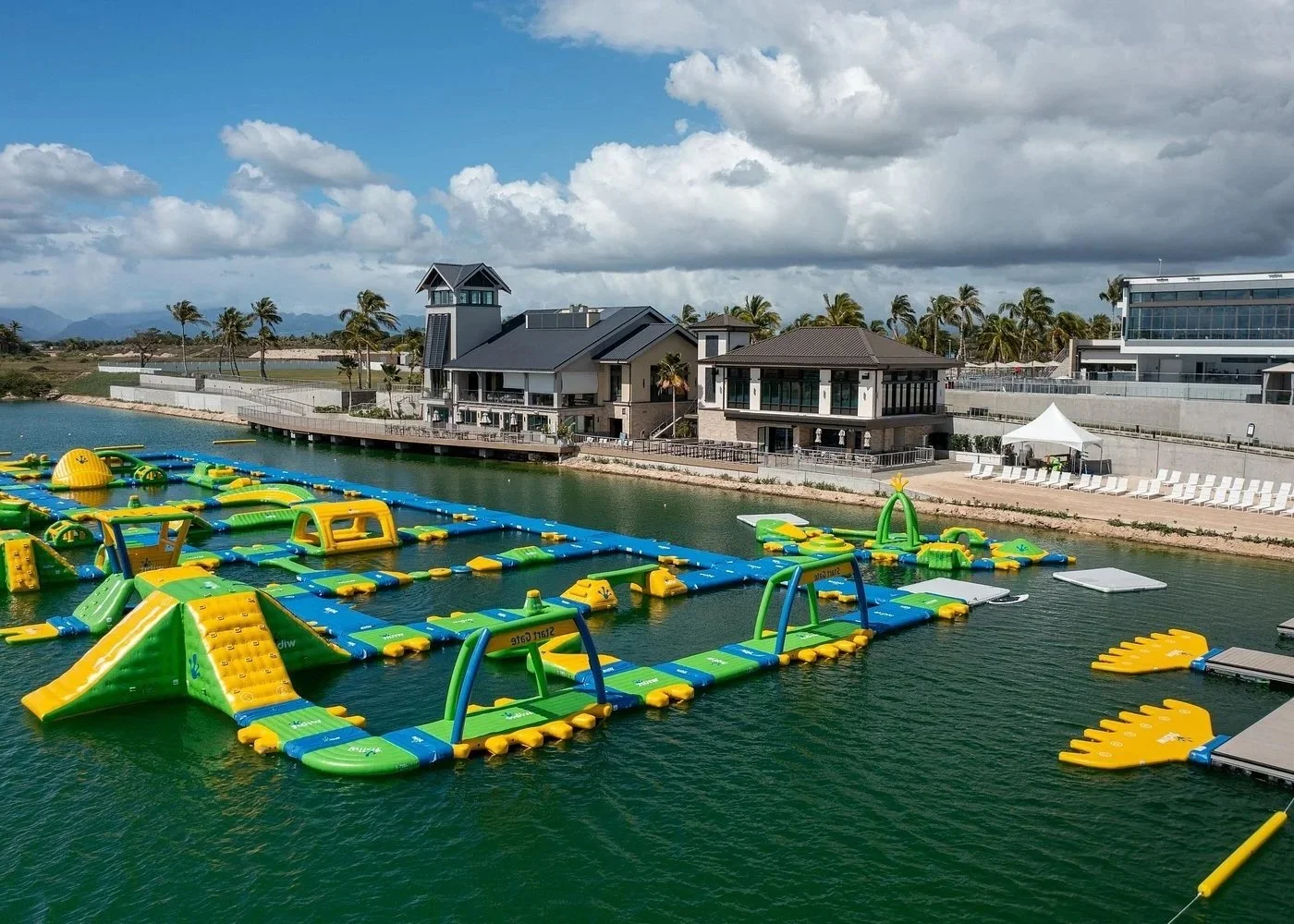
The inflatable obstacle course
An acre of floating obstacles, and a twenty-foot slide at the end of it.
Diamond Head
Diamond Head doesn't let you simply turn up. Reservations open thirty days out and the slots go, so book it the day the window opens and take the earliest one you can as the trail is exposed almost end to end, and the difference between eight in the morning and midday is considerable.
Take water. Take a hat. That’s the whole packing list and the two things people most often skip.
The trail itself isn’t overly long — a series of switchbacks up the crater wall, two flights of stairs through a lit tunnel, a set of old military bunkers left over from the coastal defences, and then the rim. What you notice on the way up is who's around you: families with small children, couples in their seventies taking it in sections, teenagers charging past, people in proper hiking boots beside people in thongs. It's a walk, not a climb. Anyone reasonably mobile can do it, and half the pleasure is that everyone has.
At the top, Waikīkī is laid out below in a single frame. The beach, the hotels, the reef line, the boats, the Pacific going on forever behind it. From up here the island finally makes sense.
North Shore by convertible
Some days want a car, and this one wanted the roof down. We collected a Mustang in Waikīkī and pointed it up the windward coast, an hour of ocean on your right, mountains going vertical on your left.
Kualoa Ranch is a working cattle ranch first, and Hawai'i's film backlot second. We took the Raptor UTV tour, two hours behind the wheel of a buggy, following a guide up through Ka'a'awa Valley on tracks no bus could manage. The film sites come thick and fast: the Jurassic Park log, the Jurassic World bunker, Godzilla's footprints still pressed into the ground, the boneyard from Kong: Skull Island, the clearing where the Jumanji dance fight happened, the gate from 50 First Dates. Then the valley floor that's played Vietnam in Windtalkers, the crash site in Lost, and half a dozen other worlds. More than two hundred and fifty productions have shot here, and you can see why in about four minutes.
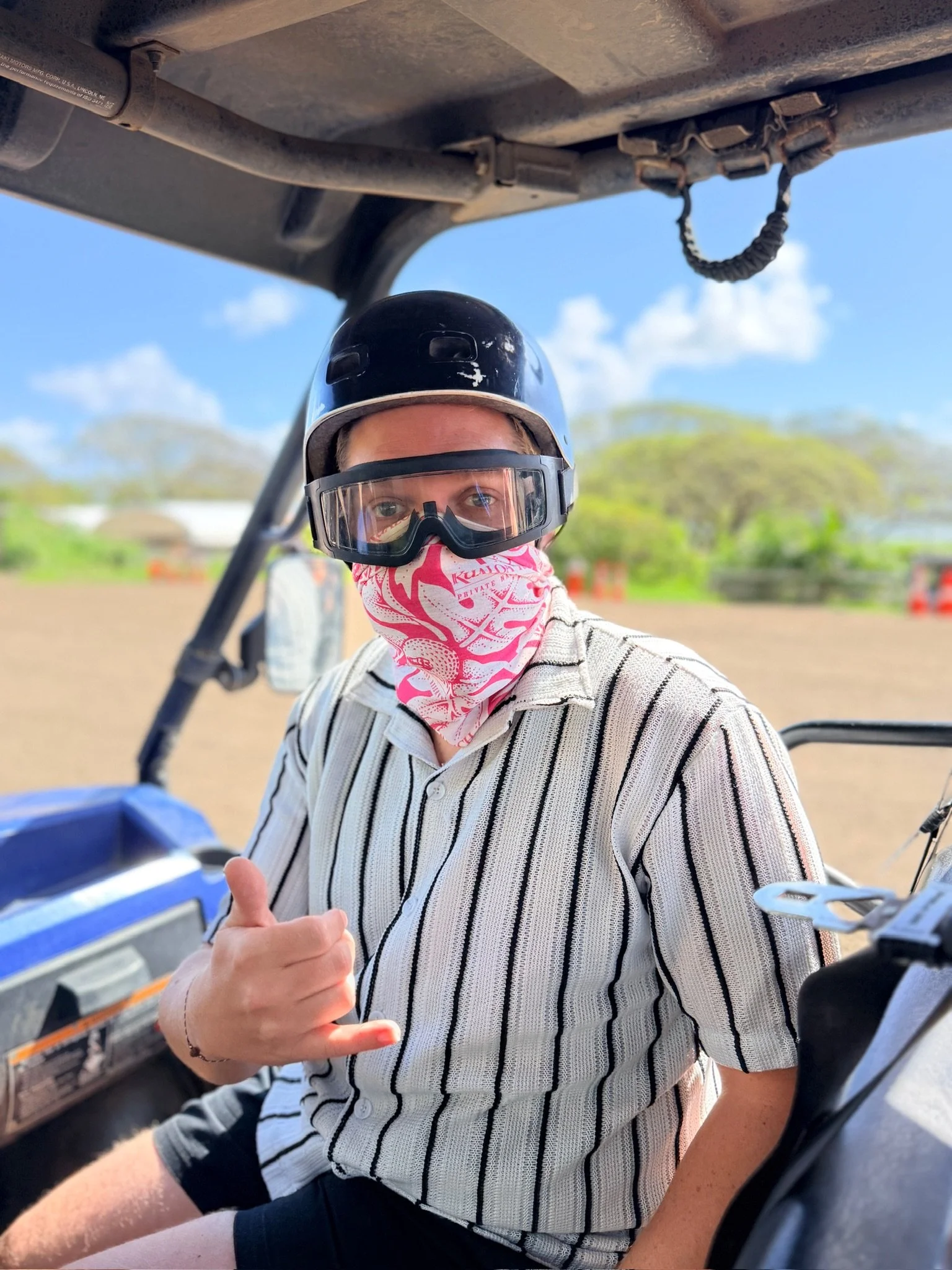
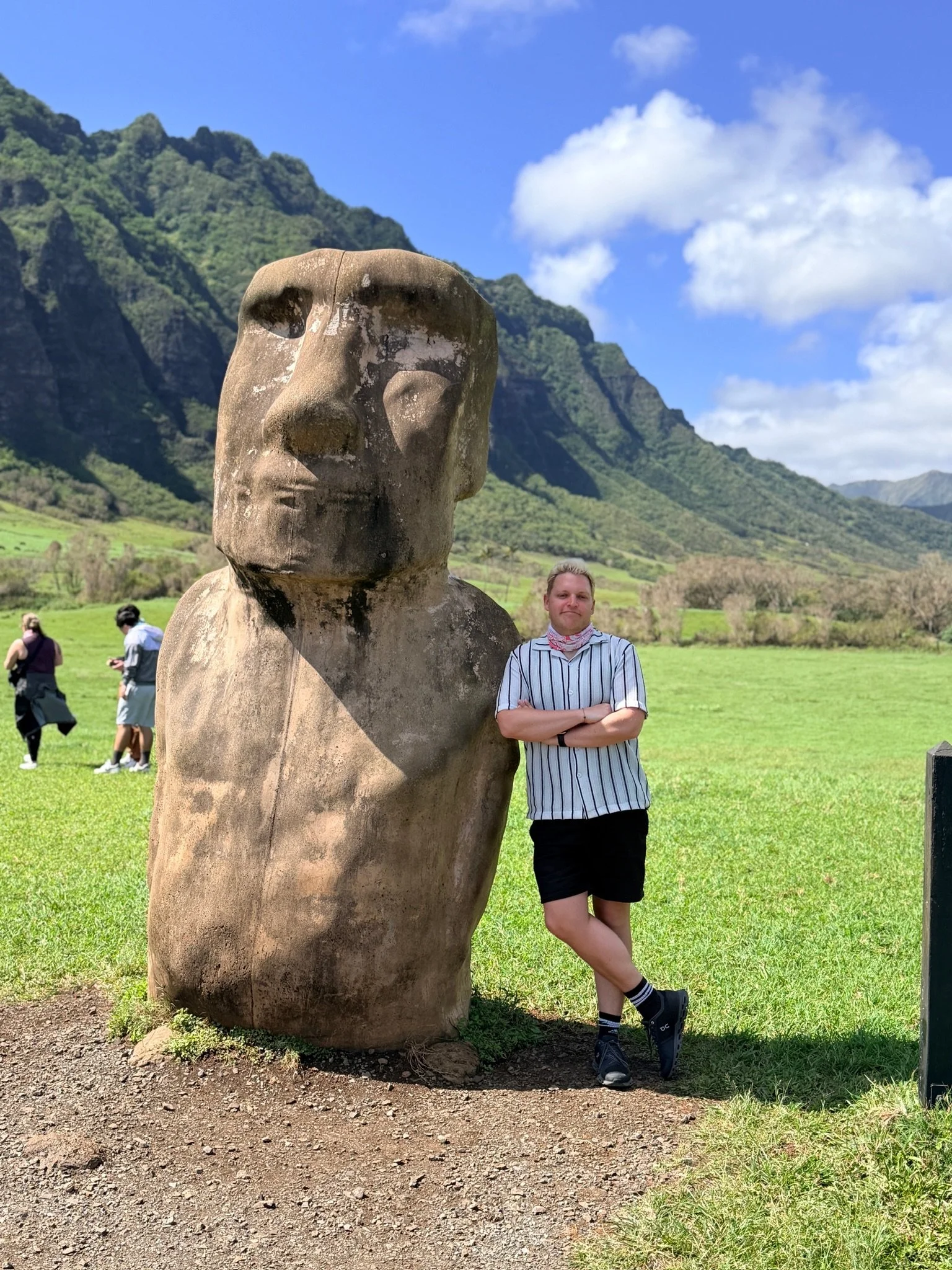
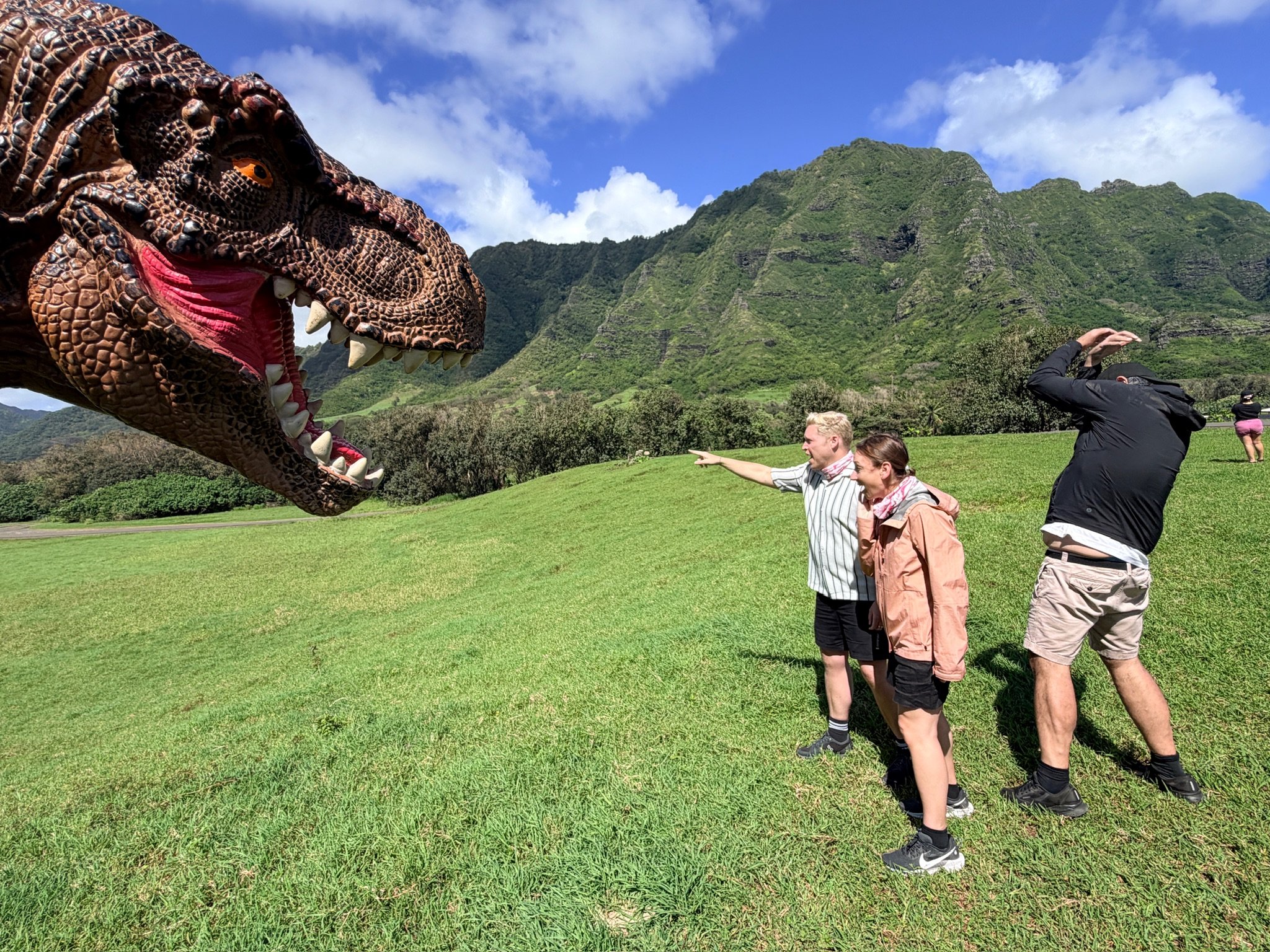
What we didn't expect was how much of it wasn't about the movies. Between stops came the older story: how the valley was farmed and fished long before any of it, the fishpond down on the shore, the families who worked this land, and what the ranch has meant to them since. Our guide talked about the 1946 tsunami that came through here, the concrete bunker still standing from the war, and why certain ground is treated the way it is. You leave with mud on your boots, a phone full of Jurassic Park photographs, and a clearer understanding of the island you're standing on, which is the part we're still talking about.
Secret Island Beach - part of the ranch but reached from outside it, so it never fills. Flat water, a scatter of hammocks and kayaks, almost nobody there. The kind of beach that exists mostly so a morning of engine noise has somewhere quiet to finish. If you have time, make sure you make a stop here.
Waimea Valley broke up the drive north, and turned out to be much more than a leg-stretch. The valley is a wahi pana, a storied place, and it's treated as one: a paved path runs a little over a kilometre up through some sixty botanical collections, past a reconstructed kauhale, the cluster of thatched houses where a Hawaiian family would have lived and worked this ground. Ginger, palms, heliconia, shade almost the whole way.
Then the falls. You hear them before the path opens out, and the pool at the base is broad and deep and darker than you expect, walled in on three sides by rock with the water dropping in a single ribbon down the middle. You can swim here, with lifeguards watching and life jackets handed out at the water's edge. The first few strokes are properly cold, then you acclimatise and stop noticing. Swim out toward the fall and the noise closes in around you, the spray comes over the top of everything, and you tread water there looking up at the cliff and the water coming off it.
Walk in, get in, walk back out through the gardens. Ten minutes in that water resets the whole day.
Hale'iwa took the rest of the afternoon. The beach park doubles as a turtle-viewing platform with green sea turtles hauled out on the sand, entirely unbothered by their audience. The town behind it is all shave ice, surf shops and slow traffic, and worth an hour before you turn for home.
The car went back that evening, roof still down the whole way.
Crossing to the Big Island
Hilo is a short flight and a different climate: greener, wetter, quieter, more island life than resort strip. We collected an SUV at the airport and gave ourselves the long way round to Kona.
Three hours becomes most of a day once Hawai'i Volcanoes National Park takes hold of you. The road climbs out of the rainforest and the vegetation simply stops. You come over a rise and there is Kīlauea's caldera, a plain of black rock kilometres across with Halema'uma'u sunk into the middle of it, steam lifting off the crater floor in slow columns. The scale is the thing, and photographs don’t do it justice. Along the rim, steam vents breathe out of cracks in the ground at the roadside, warm and wet on your face, and the earth smells faintly of sulphur. You are standing on a volcano that is very much still working.
Then you go inside one. Nāhuku, the Thurston lava tube, is the plumbing of the volcano itself. Lava once ran through here at over a thousand degrees, crusting over on top while the molten core poured beneath, and when it drained away this was what remained. You reach it down a path through a gully of tree ferns, so dense and so green it feels like a different island, and the temperature drops the moment you're through the entrance. Inside it's bigger than you expect: high enough to walk upright, wide enough for several abreast, the walls still ribbed with the flow lines of the rock that made them, water beading on the ceiling, every sound gone flat and close. Hawaiians used tubes like this for shelter, for storing food, and for catching drinking water where it filtered through the roof, on an island with almost no rivers, a cave that drips is a resource, and some hold burials, which the park rightly keeps closed. A few hundred metres in, you come back out into the ferns and the daylight.
Mauna Kea we left for another trip. The mountain clears 4,200 metres and dominates this side of the island. For anyone who likes a hard walk, the Humu'ula Trail runs from the visitor station to the summit: around 21 kilometres return, roughly 1,500 metres of climb, nine to ten hours on your feet. Technically it's a walk-up, no ropes, no scrambling, but all of it happens above 2,800 metres on loose cinder and rough lava, and the altitude does the work the terrain doesn't. Acclimatise first. The summit closes half an hour after sunset, so the day needs planning. Next time.
The Hāmākua coast filled the drive. This is old sugar country, the plantations closed decades ago and the land has gone back to rainforest, macadamia and pasture, with the highway running along the top of sea cliffs the whole way. We stopped at a macadamia plantation, and earlier in the day worked our way along Hilo's main street, a few blocks of old timber storefronts, bookshops and surf shops that haven't changed much in fifty years. The waterfalls are mostly unsignposted; you learn to read the pull-outs, and two or three cars on the verge usually means something worth seeing over the edge. 'Akaka Falls is the exception, signposted, paved, and 135 metres in a single drop.
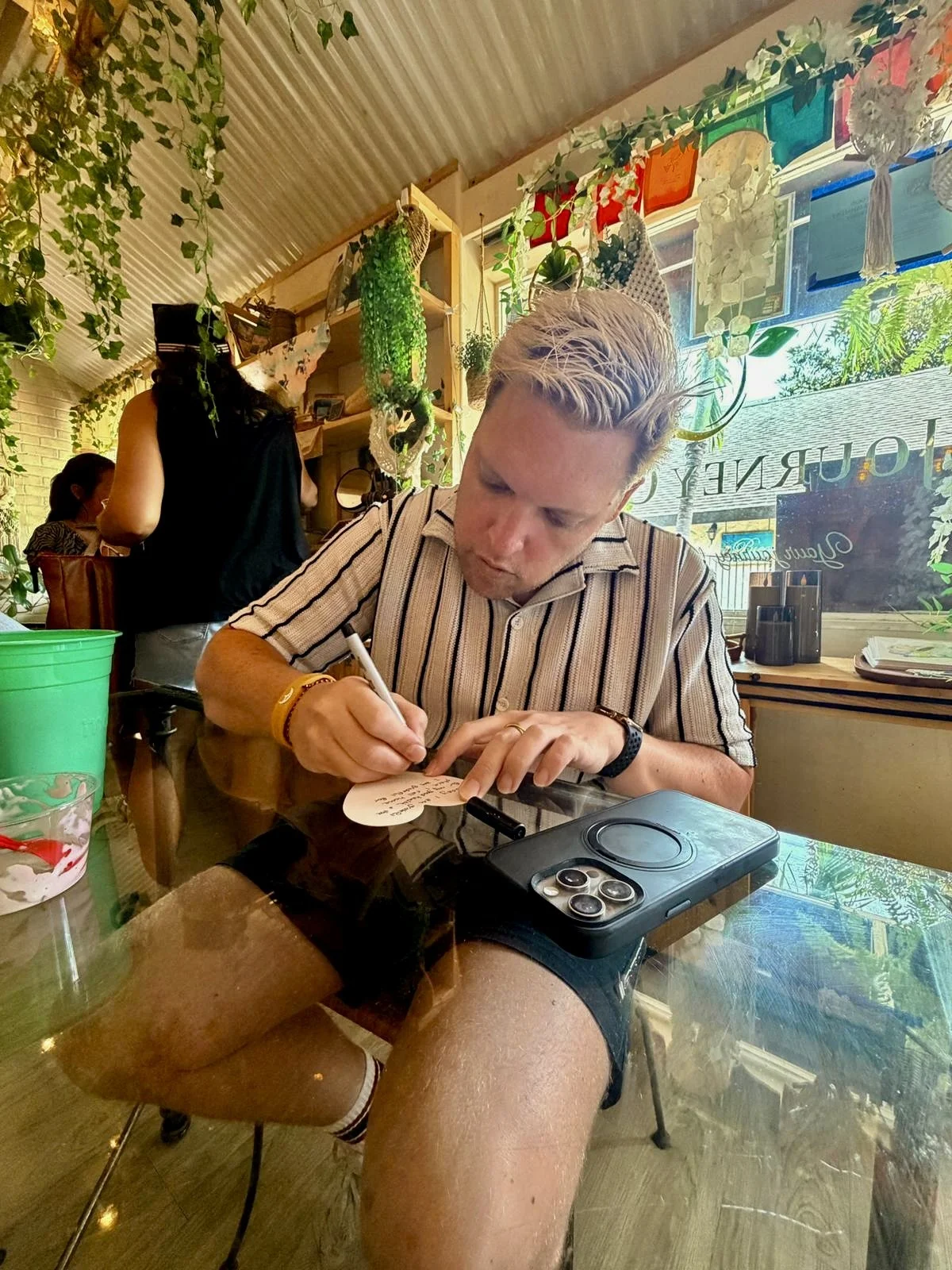
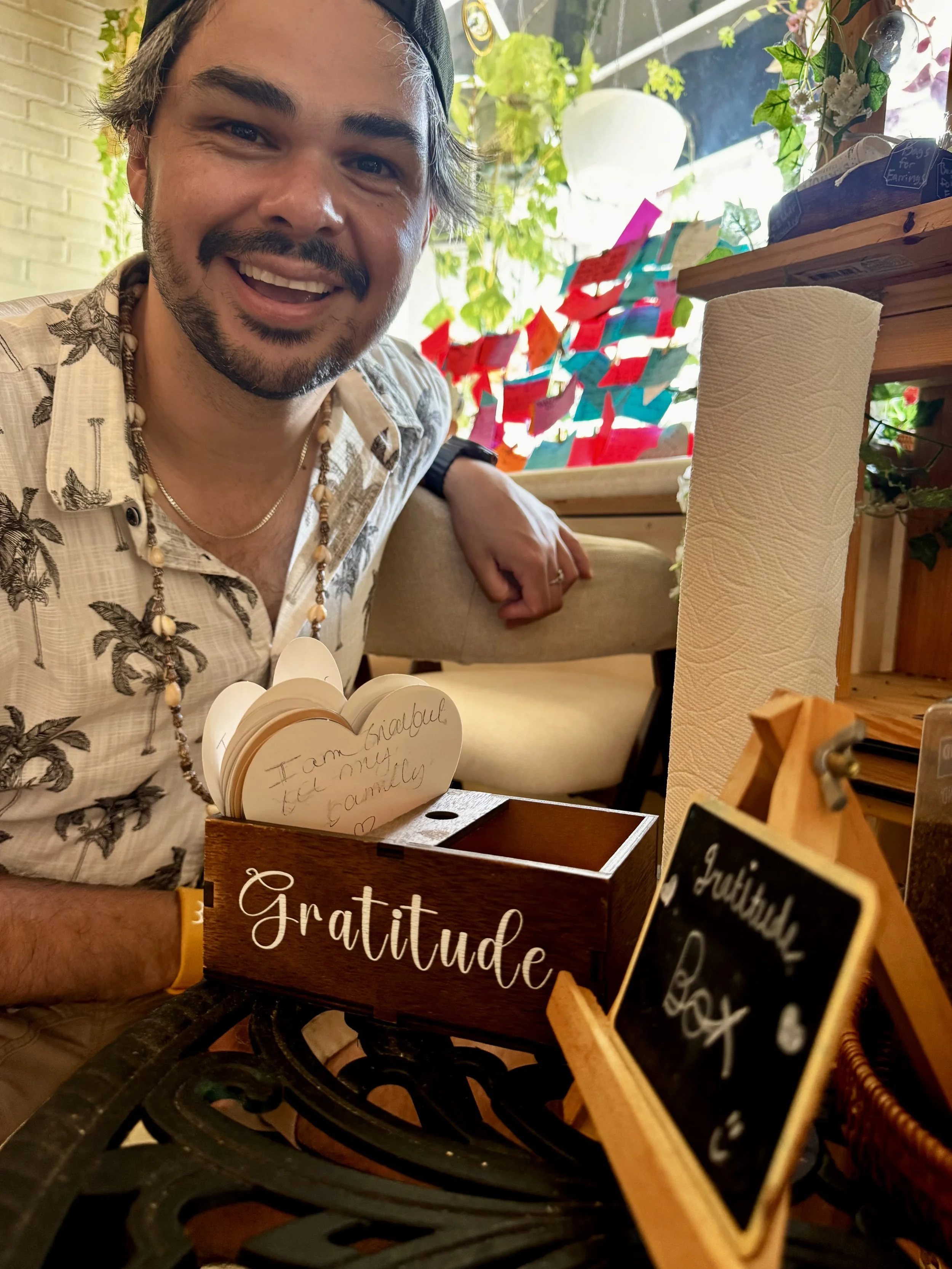
A vegan cafe in Kona, which we only discovered after the ice cream, which tells you how good it was. Here I'm writing a card for their tree of intentions.
King Kamehameha's Kona Beach Hotel
We chose the Courtyard by Marriott King Kamehameha's Kona Beach Hotel for the luau, mostly. The Island Breeze Luau runs on the hotel's own oceanfront grounds three nights a week, which meant no drive, no shuttle, no working out how to get home afterwards. That alone justified it. Then we discovered the hotel serves as official headquarters for the IRONMAN World Championship every October, which settled it for the die-hard fitness addict in the group.
The location does the rest of the work. The hotel sits at the top of Kailua-Kona's main street, so the town's shops and restaurants are a short walk, and there's ample parking on site. The grounds occupy Kamakahonu Bay, where King Kamehameha spent his final years, with Ahu'ena Heiau, a restored temple and national historic landmark, standing at the entrance to the bay. You walk past it to reach the beach: a protected cove with calm water, and kayaks, boards and snorkel gear for hire on the sand.
The rest ticks over nicely. Rooms are generous, with lanais. The pool is good and the poolside bar better, our default landing spot in the late afternoon. There's a 24-hour gym. And the detail that mattered most by day nine: guest laundry on site. A week of dirt, salt water and lava tubes catches up with you, and washing it all out mid-trip was a game changer.
Worth knowing: the luau needs booking ahead — Tuesday, Thursday and Sunday evenings, and it sells out.
Kailua Kona and manta rays
Kona coffee grows in a narrow belt on the slopes above the town, and Heavenly Hawaiian sits in the middle of it at Holualoa, a working farm since 1994, growing, processing and roasting everything on site. It's a twenty-minute drive up from the coast and several degrees cooler when you get there.
We came for the tasting and stayed for the roasting. The tasting first: four coffees poured side by side, unlimited. The low acidity, the sweetness, the difference between one roast level and the next.
Then the Paniolo Roasting Class. Paniolo are the Hawaiian cowboys, and their cattle culture on this island predates the Texas ranches by decades. The class takes its name from how they roasted coffee out on the range: green beans in an open skillet over a flame, stirred by hand until they're right. That's exactly what you do. Standing over a pan, watching the beans go from pale green to yellow to brown, listening for the first crack, the smoke coming up, learning by smell when to pull them off. There's no machine and no timer, which is the point — you make the call yourself.
You name your roast, they seal it into a bag, and you take it home.
The manta ray night snorkel is the thing people come to Kona for, and it earns it. Boats run out at dusk, drop lights into the water, and wait: the light draws plankton, the plankton draws the mantas, and then you're floating on the surface holding a lit board while animals with three to four metre wingspans turn slow barrel rolls beneath you — close enough that the water shifts when they bank, close enough to see their mouths open as they feed.
The hotel keeps its own dive operator on the property, so ours was a walk down to the water rather than a drive and a marina car park. It runs a little over two hours, most of it spent floating in the dark waiting for something enormous to reappear. You must book ahead - this sells out. Book it early. Wetsuit tops are usually provided; take a towel and something warm for the ride back.
The luau
Island Breeze Lū'au is the reason we booked the hotel, and it turned out to be the right instinct for a reason we hadn't understood when we booked it: the location is not a stage set. It runs on the grounds of Kamakahonu Bay, beside Ahu'ena Heiau, on ground that was King Kamehameha's own estate, the place he chose to spend the last years of his life. Most luaus are held wherever there's lawn. This one is held where it has meaning.
The evening opens before dinner does: hula lessons, mo'olelo (the storytelling) and craft demonstrations around the grounds while the sun goes down over the bay. Then the conch sounds and the Royal Court of Kamehameha I arrives, announced by a herald and a chanter, and the tone shifts from party to ceremony for a few minutes. It's genuinely stirring, and the setting does most of that work.
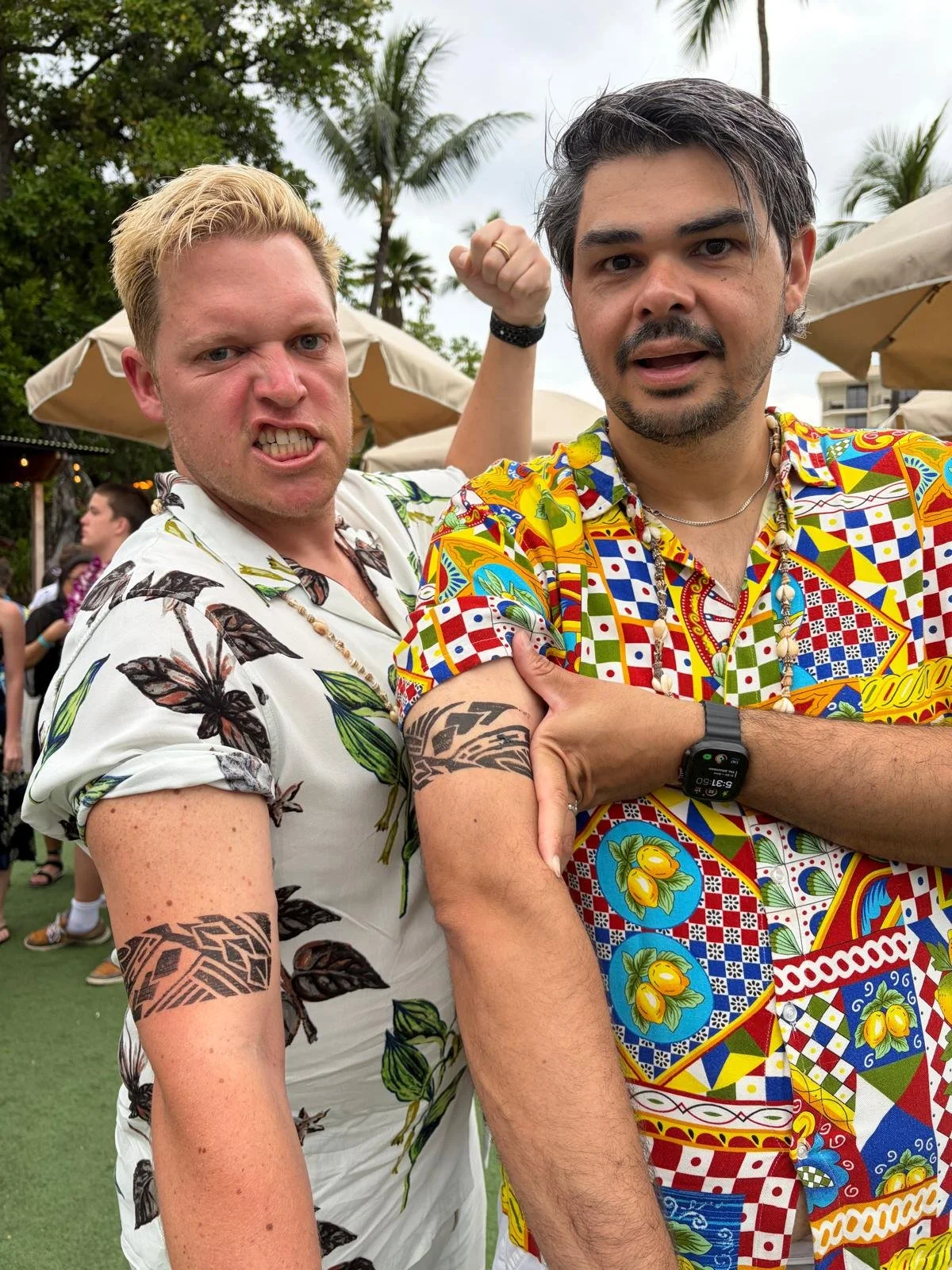
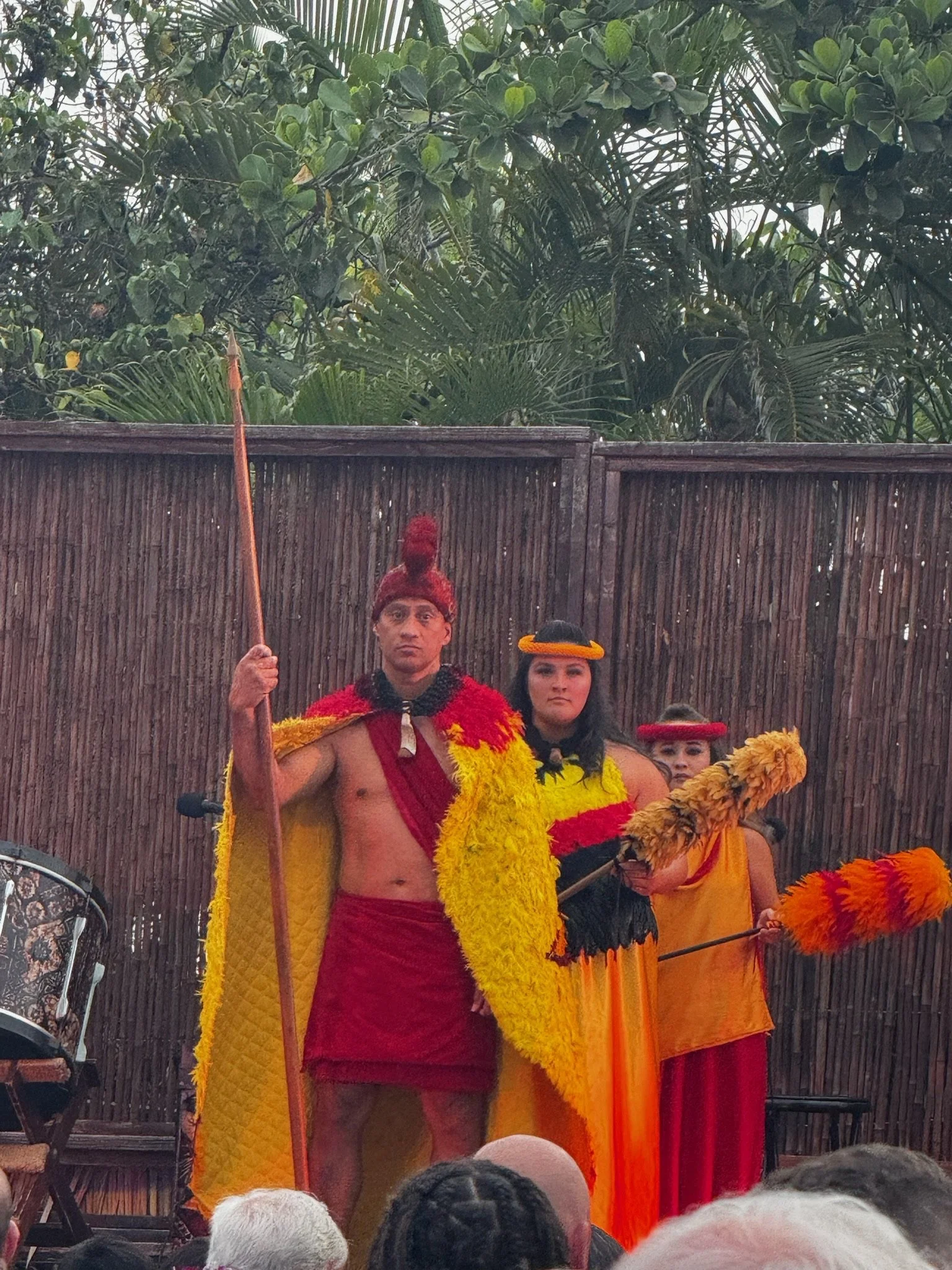
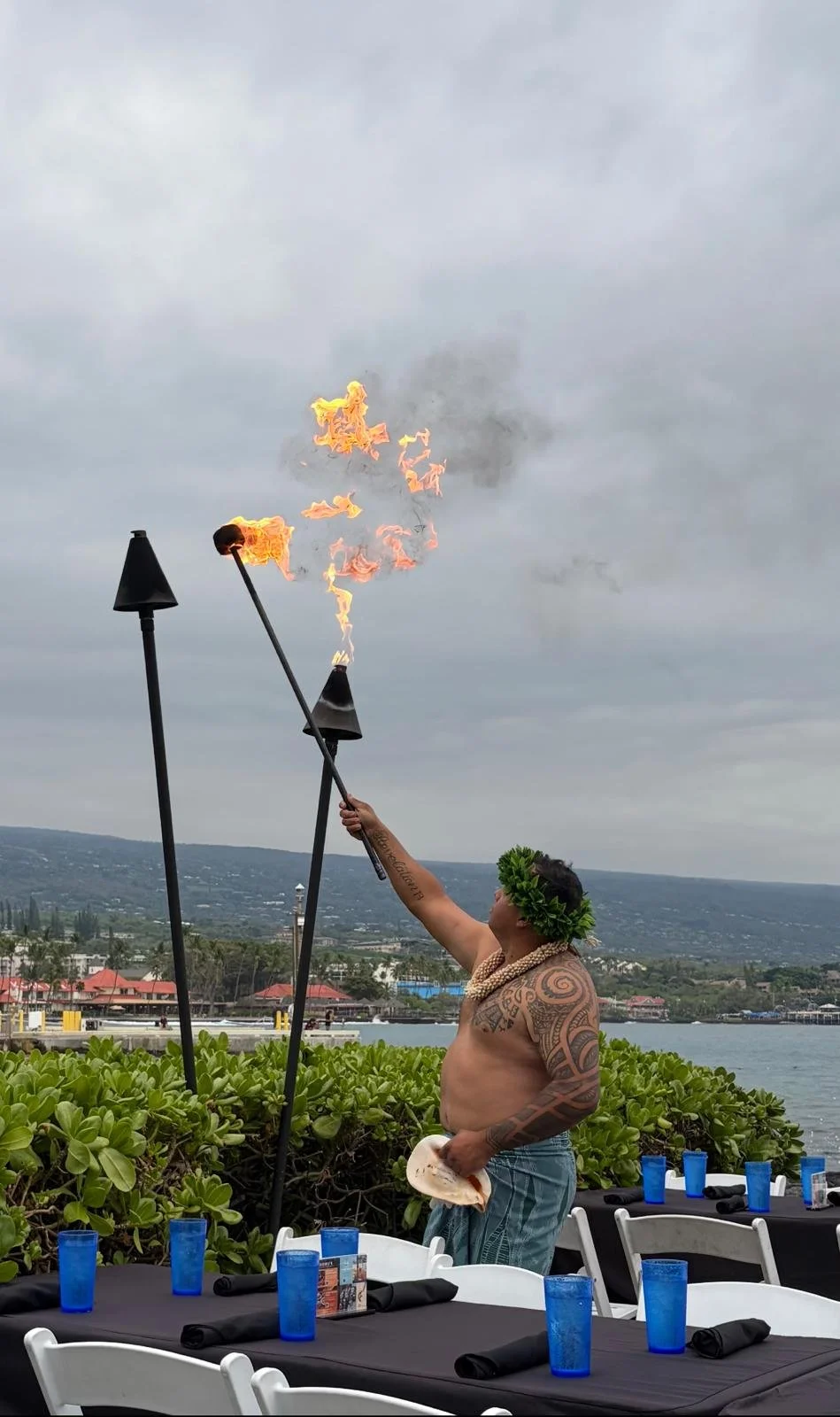
Dinner is a buffet, and a good one — kalua pork, fresh fish, chicken, island produce, the expected and the unexpected, with an open bar. Then the show, which travels the Pacific rather than staying in Hawai'i: Samoa, Tahiti, Aotearoa, each with its own dances and its own drums, building to the fire knife at the end. The performers are strong and clearly enjoy themselves, and the theme running through the whole night is 'ohana — family, and the idea that everyone in the room has been folded into it for the evening.
Is it a tourist show? Yes, and it doesn't pretend otherwise. But it's been named West Hawai'i's best since 2000, the cultural content is treated with care rather than played for laughs, and the fact that you're sitting on Kamehameha's shoreline while it happens gives it a weight the resort-lawn versions can't manufacture.
Worth knowing: Tuesday, Thursday and Sunday evenings, and it sells out — book before you arrive. Check in at the luau desk in the hotel lobby to collect tickets, and get there when doors open rather than at dinner: the pre-show hour is half the value, and the seating fills from the front.
A day for shopping
Waikele Premium Outlets
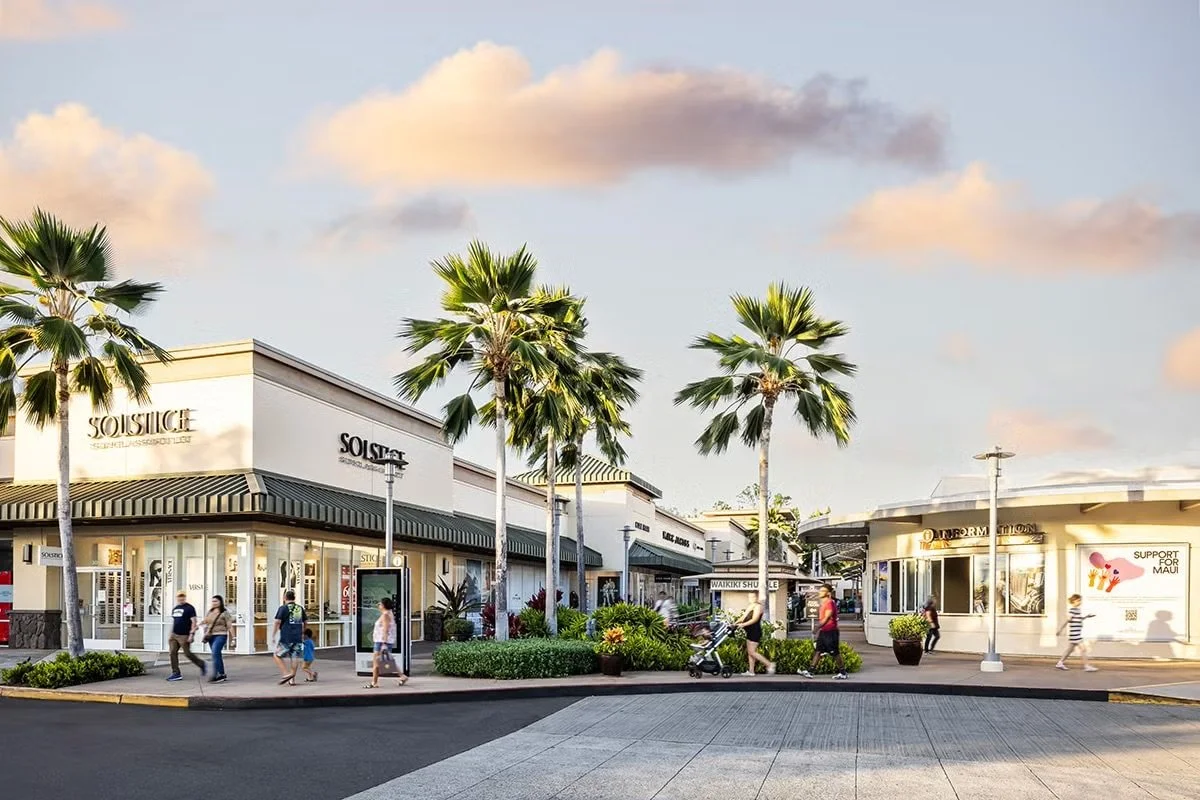
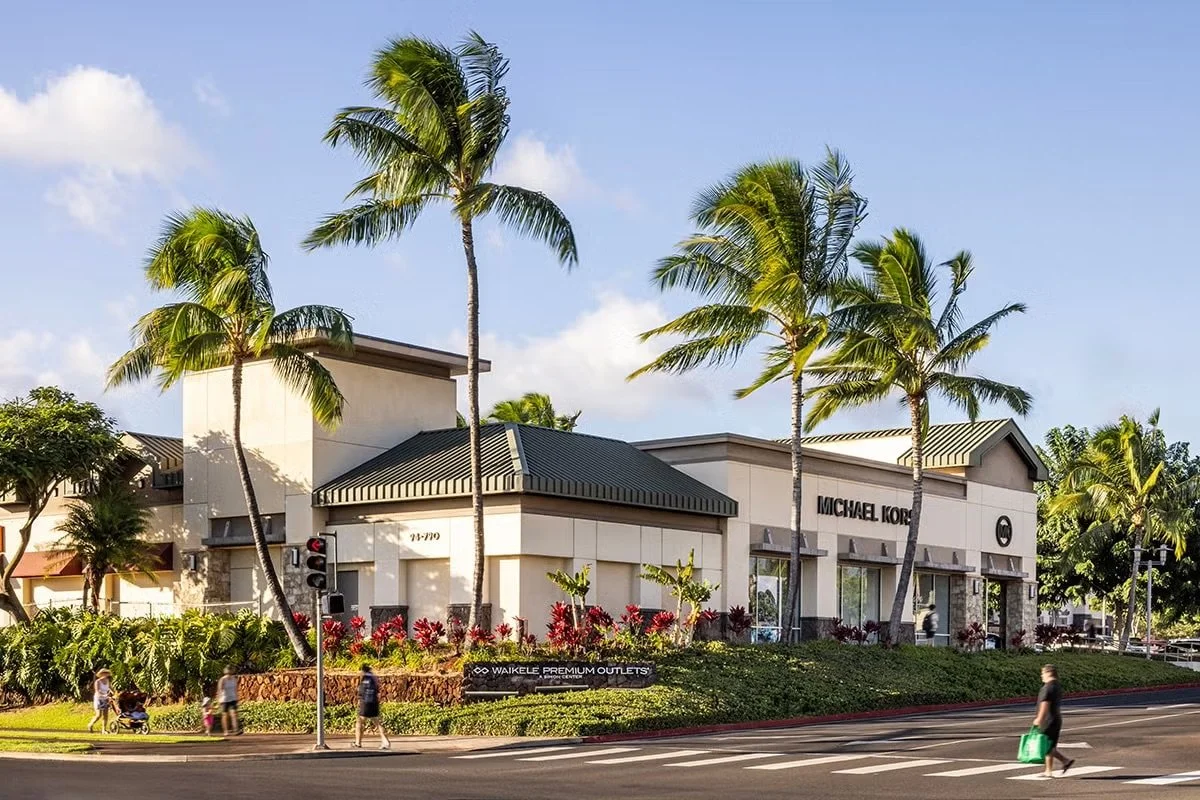
The Waikele Premium Outlets are about thirty minutes out of Waikīkī toward Waipahu: fifty-odd stores in open-air rows, low-slung and easy to walk, with a food court and plenty of parking. The mix is outlet-standard in the best sense — American brands at outlet prices, most of it current-season overflow rather than end-of-line.
The heavy hitters are the polo-shirt-and-chinos names: Polo Ralph Lauren, which is the biggest store on site and the one people plan their day around, plus Calvin Klein, Tommy Hilfiger and Lacoste. Coach, Michael Kors and Kate Spade cover handbags and accessories. Footwear runs from Crocs — which we entered as a joke and left as converts — through the sports brands such as Adidas and Vans. Then the everyday layer: Levi's, Gap, Banana Republic, sunglasses, watches, luggage.
Worth knowing: go early on a weekday. Weekends fill and the car park gets tight. Take an empty bag or plan on buying one there — several stores sell luggage and most people end up needing it. And check your baggage allowance before you commit, because the savings stop working the moment you're paying for excess.
Ala Moana Center
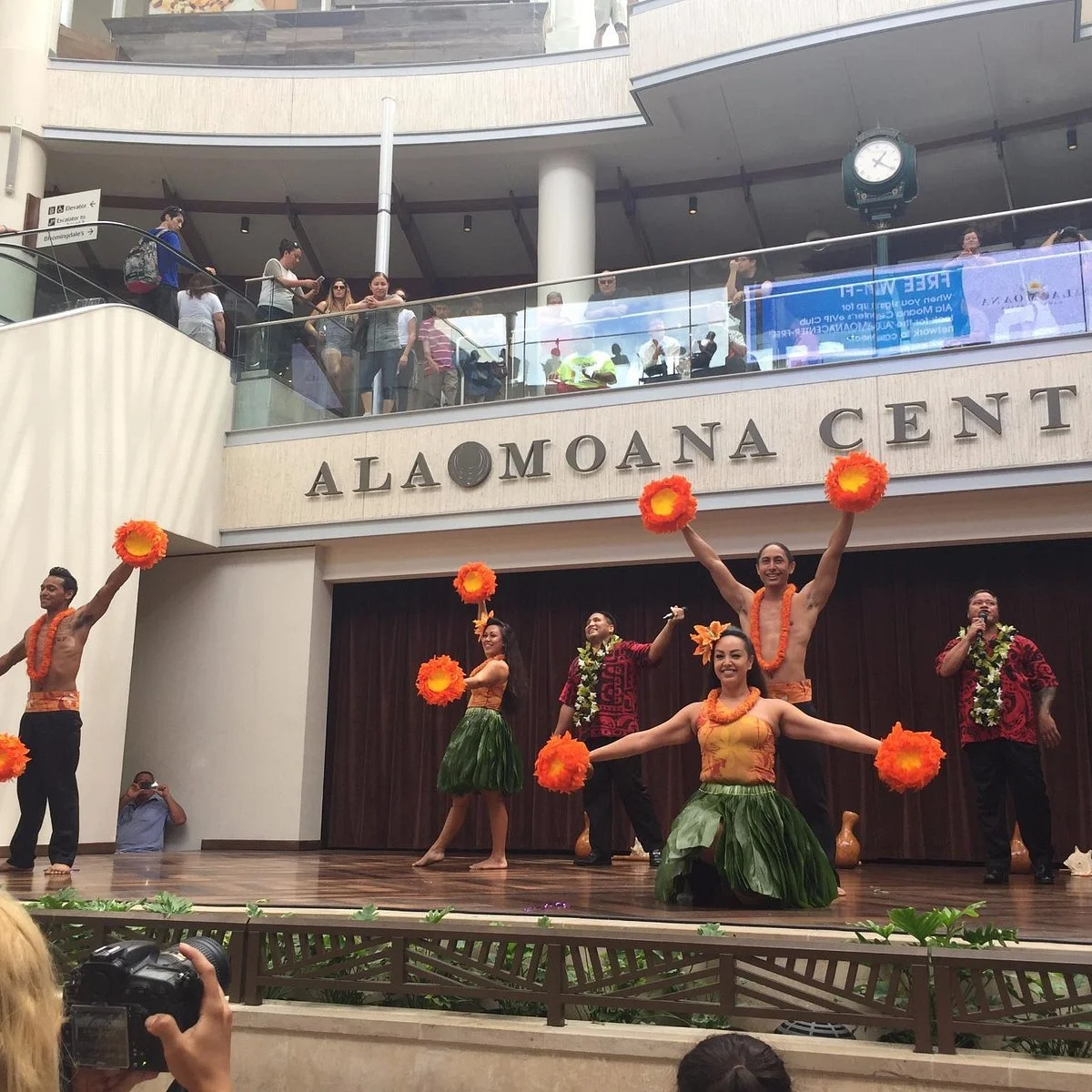
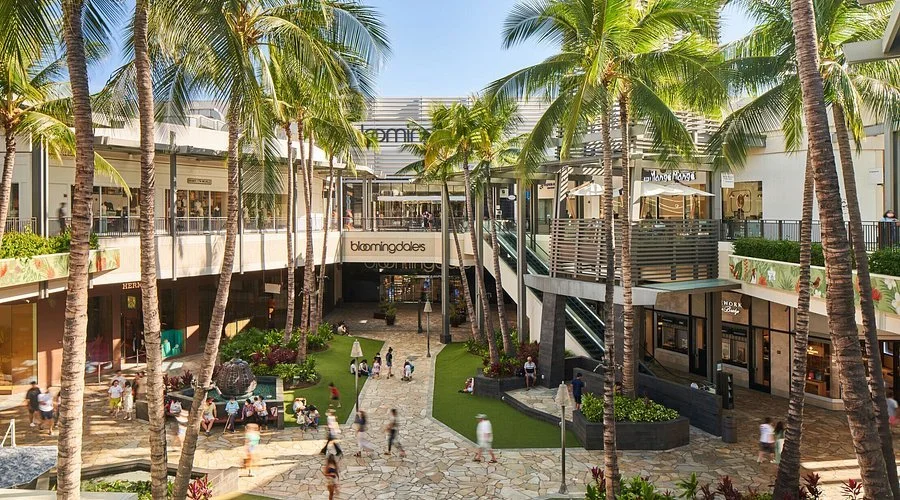
The other half of the shopping equation, and a completely different proposition. Ala Moana is the largest open-air shopping centre in the world, sitting between Waikīkī and downtown Honolulu with something like 350 stores across four levels around open courtyards and gardens.
Where Waikele is about the discount, Ala Moana is about the range. The anchors are the American department stores — Macy's, Nordstrom, Bloomingdale’s — and there's a full luxury row on top of that: Chanel, Louis Vuitton, Gucci, Hermès, Prada, most of the names you'd find on a European high street, without the European high street. Below that sits every mainstream brand you'd expect, an Apple store, and a large Japanese contingent reflecting who shops here.
The food hall is expansive, a Foodland Farms for provisions, and a run of restaurants that locals use independently of the shopping. There's live hula on the centre stage most afternoons.
Queer nights out
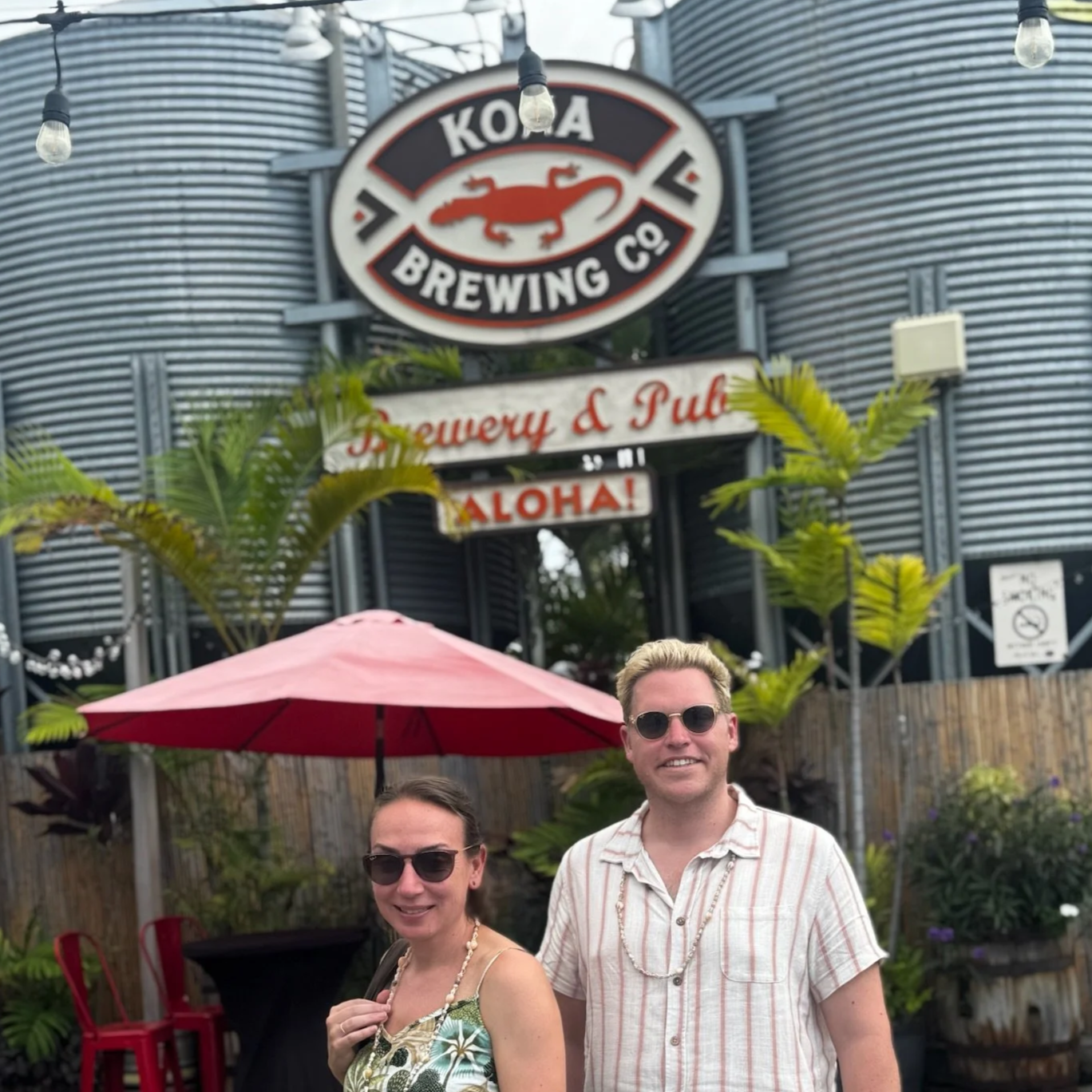
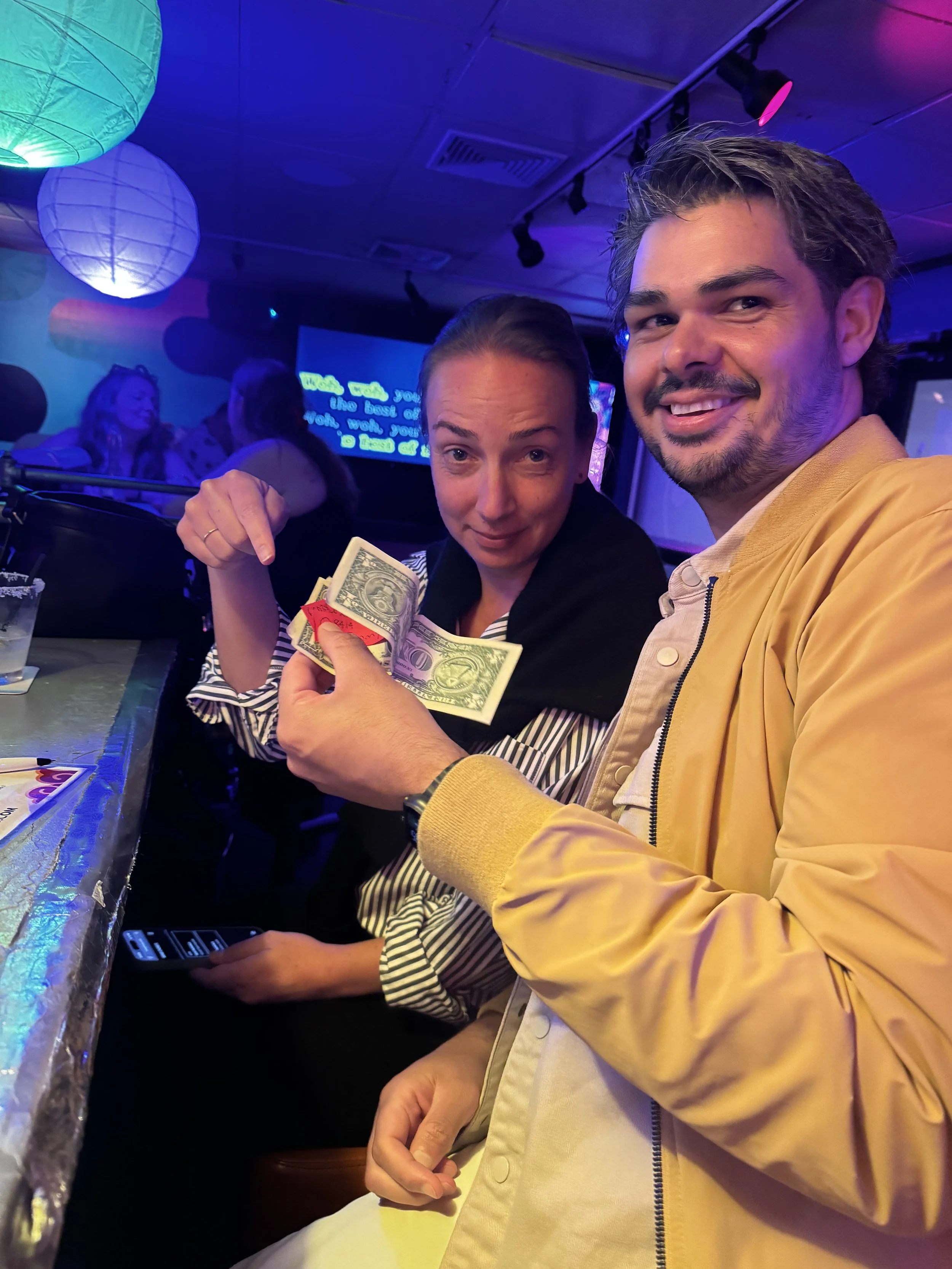
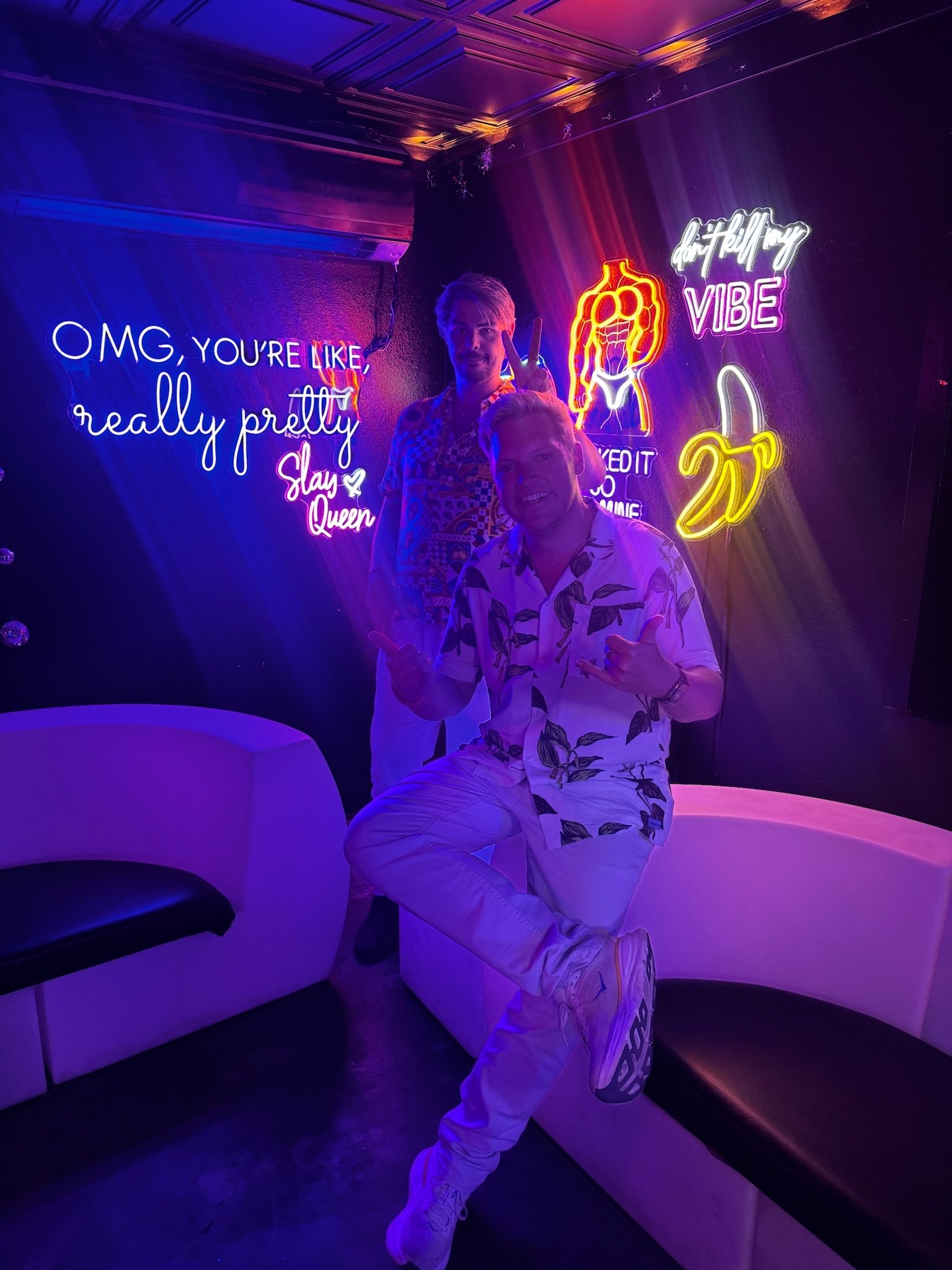
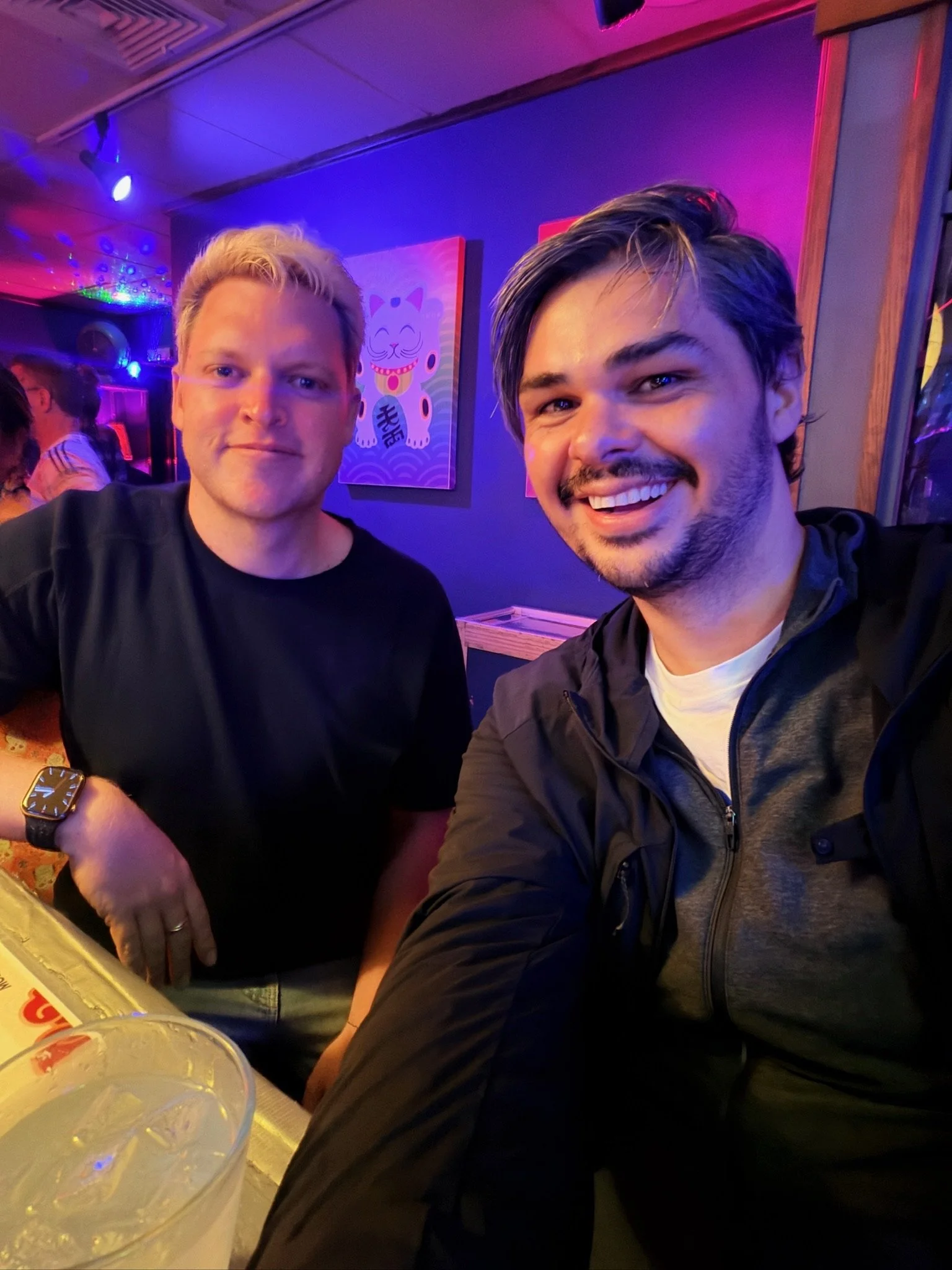
Waikīkī has the bigger scene, and most of it sits within a few blocks of Kūhiō Avenue, close enough to walk between everything, which is half the appeal after a day on the sand. Wang Chung's was the fan favourite, by a distance. We ended up there most nights, for karaoke and a few nightcaps. The staff are up for a bit of banter and remembered us after the first visit, which is the whole difference between a bar you drink at and a bar you come back to. The vibe was always fun at Wang Chungs and I would definitely suggest a visit when in Waikīkī.
The rest of the circuit: Hula's Bar & Lei Stand is the institution, open-air, upstairs, looking out over Queen's Beach, and worth going to at least once in daylight. Bacchus is the civilised start to an evening: a small upstairs bar, a good happy hour, and a crowd that's there to talk rather than shout. In Between is the small neighbourhood one. Scarlet is the clubby end of the night, if you've got the legs for it.
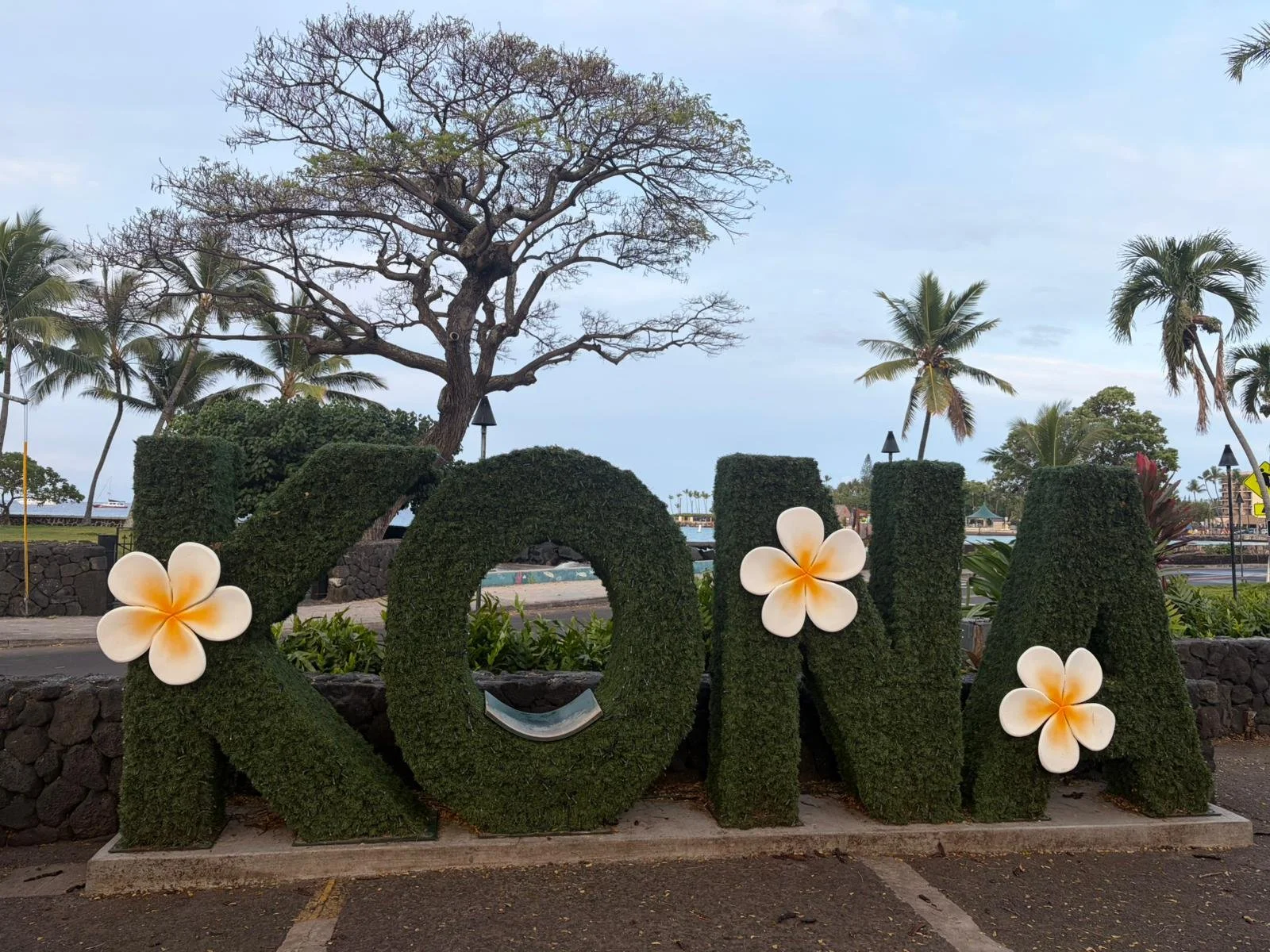
Kona keeps things smaller, and we liked it more for that. Two bars filled the nights either side of the manta trip.
Mask-Querade Bar is a single room hung floor to ceiling with masquerade masks, and the owner has the regulars' orders started before they've reached the bar. Being a stranger there lasts about ten minutes.
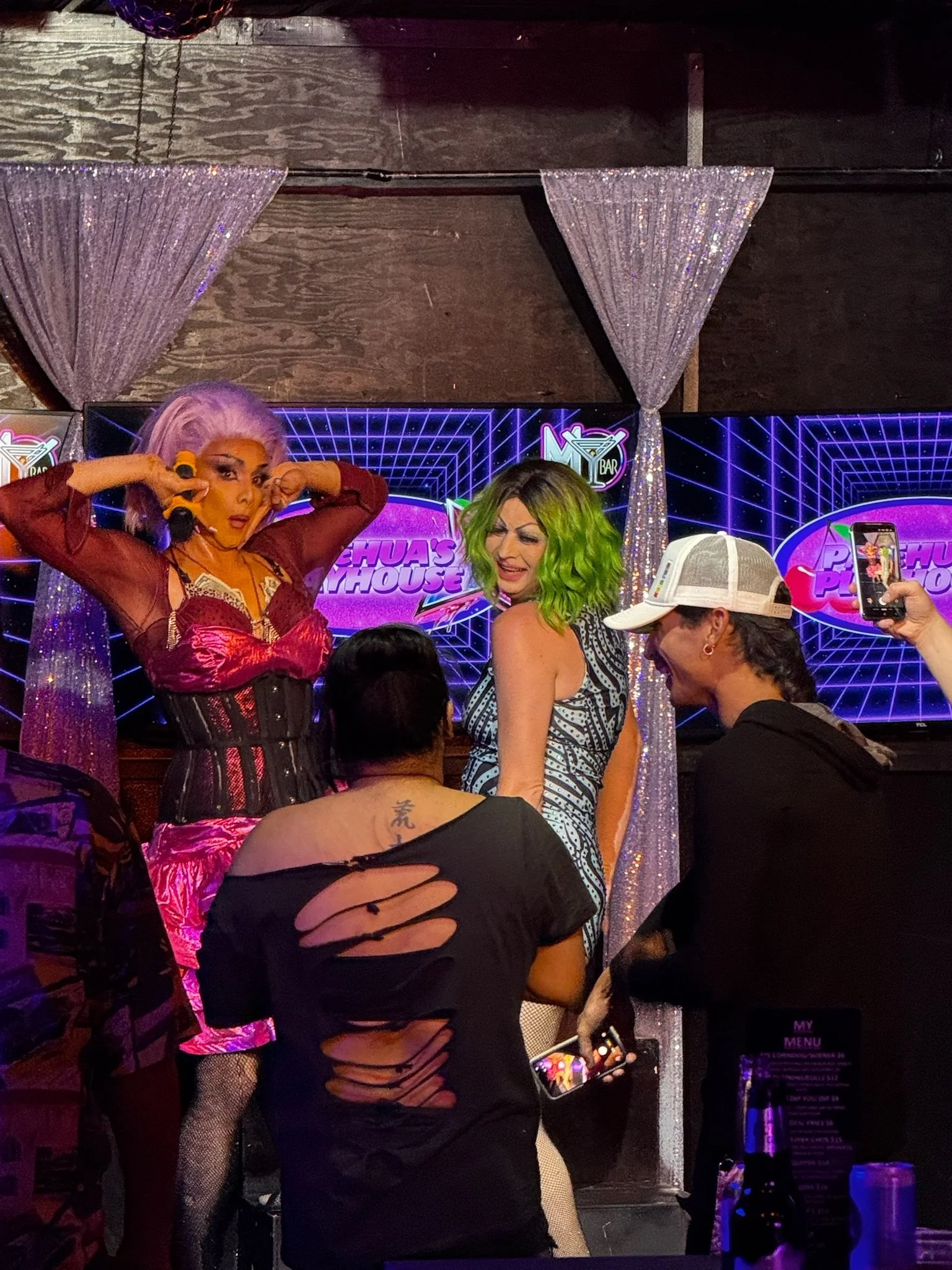
My Bar Kona did two nights' work across the stay. The first was karaoke and dancing, which ran later than intended. The second was a stand-up set — properly funny, in a room small enough that the comedian could see every face and used it.
The return
The QF104 service home, and a landing back in Sydney the following evening. Two islands in ten days is a fair split: O’ahu for the beach, the history and the drive-it-yourself adventure; the Big Island for the volcano, the summit and the night the ocean produced something the size of a car. Book the manta rays, the luau and Diamond Head before you land, everything else in Hawai’i can wait for you.
If it has a first chapter worth writing, we’ll draw it. Begin here →
